Two guides, three articles, one method
Jelly Force Guides: How To Read This Label And This Aisle
Two long guides and three shorter articles sit behind this page. One guide covers men's daily supplements as a whole aisle. The other walks a gummy label from the serving size down to the footnotes. The three articles each take a single number: 82 mg, nine ingredient names, and the checks worth running before you pay for anything in this category.
Which guide should you read first?
If you are standing in a store with a bottle in your hand, read the men’s daily supplement guide. If you already own the bottle and want to know what the back of it says, read reading a gummy label. The three articles are shorter and each answers one question.
Every piece below is written from the printed Supplement Facts panel first and the sales page second. Where the two disagree, the panel wins and the article says so.
| Guide or article | What it answers | Who it is for |
|---|---|---|
| A men’s daily supplement guide | What a blend is allowed to hide, what the research supports, and why erection trouble belongs with a doctor | Someone holding a bottle in a store and deciding |
| Reading a gummy label | Every printed line on a gummy panel, in order, using this bottle as the worked example | Anyone who wants to check a label without help |
| What 82 mg buys you | How 82 mg compares with the sugar on the same panel, with trial doses, and with a cup of coffee | A reader who wants the arithmetic done out loud |
| Five named, nine printed | Which four ingredients the sales page leaves off, and why each one matters to somebody | A reader deciding whether the gap is a big deal |
| How to shop this aisle | FDA notification lists, real lab paperwork, seals, phone numbers and what to tell your doctor | A first-time buyer in this category |
Start with the printed panel if you want the label typed out with nothing added.
The two long guides
Both guides are about a category rather than a sales pitch. They use this bottle as the example because it is the label in front of us.
A men’s daily supplement guide
This one answers the question a man actually has in the aisle: what am I being asked to buy here? It explains what a proprietary blend is, which is a label line allowed to give one total weight and then keep every part amount behind it. It sets out what the published research supports among the plants that turn up in almost every bottle in this section, which is less than the front of the box implies. It covers the reason the FDA keeps a public list of products in this category found to hold undeclared prescription drug ingredients. And it says plainly that trouble with erections is often a sign of something else, and belongs with a doctor. It is for the person deciding, not the person who already decided.
Reading a gummy label
This one is a skill rather than an opinion. It walks the panel on this bottle from the top: serving size, servings per container, calories, carbohydrate, total sugar, added sugar, sodium, then the blend line, then the second list underneath that most people skip. It explains why the Supplement Facts panel and the other-ingredients line are two different things with two different jobs, and covers pectin against gelatin, which decides whether a vegetarian claim holds. It is for anyone who wants to pick up any gummy in any store and know what they are reading.
The three articles
Each article takes one fact off the label and follows it out. They are shorter than the guides and they are meant to be read in one sitting.
What 82 mg buys you
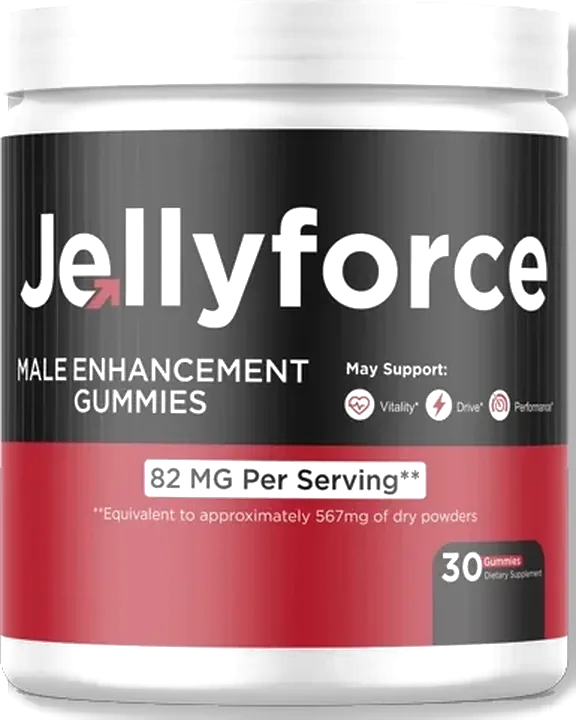
The whole proprietary blend on this panel weighs 82 milligrams, and nine ingredients share it. The same gummy carries 3 grams of added sugar, which is 3,000 milligrams. Both figures are printed on the same panel, so the comparison is arithmetic rather than an argument. The article puts 82 mg next to the L-arginine trials, which run in grams a day, and next to a cup of coffee. It also quotes the label’s own footnote, “equivalent to approximately 567 mg of dry powders”, and explains fairly what that means.
Five named, nine printed
The sales page names five ingredients. The panel names nine. The four left off the page are green tea extract, caffeine at 5 mg, tribulus terrestris and horny goat weed extract. The article says what each of the four is and why each matters to somebody: a man avoiding stimulants, a man watching his liver, a man who has heard the tribulus testosterone story, and a man who would simply like the full list.
How to shop this aisle
Practical checks, none of which need a laboratory. Where the FDA notification list lives. What a real certificate of analysis contains and what a picture of a badge does not. Why a phone number a person answers tells you more than eleven seals. Why your doctor needs to know what is in your kitchen drawer.
How to read any supplement label in four moves
Four moves, in this order, work on any bottle in any store. They take about ninety seconds and they do not require you to know a single plant name.
The order matters. People start in the middle, at the ingredient names, because that is the part the marketing prepared them for.
Read the serving size before you read any number
Every figure on a Supplement Facts panel is per serving. On this bottle the serving is 1 gummy and the container holds 30, so one bottle is one month at the printed dose. On a bottle whose serving is two or three gummies, divide the container count before comparing anything.
Find the percentage column, then find the daggers
A percentage in the right-hand column means an official reference amount exists for that line. A dagger, or the words Daily Value not established, means none exists. Here the added sugar line carries 6 percent and the blend line carries a dagger. Every botanical in this aisle carries a dagger.
Count the names under the blend line
A proprietary blend is allowed to print one total weight and then list its parts in order of how much there is, heaviest first (FDA labeling guide). Dividing the total by the number of names gets you nothing real. Counting still tells you plenty: nine names under 82 mg means every one of them is small.
Read the other ingredients line and the footnotes last, and read them properly
This is where the sugar, the gelling agent, the acids and the flavors live, and it is the part that gets skipped. On this label it reads: Corn Syrup, Cane Sugar, Water, Apple Pectin, Sorbitol Liquid, Natural Flavors, Citric Acid, Sodium Citrate Dihydrate. Two of the first three entries are sugars, which is where the 3 grams come from.
Two federal consumer pages are worth keeping beside this: the NIH Office of Dietary Supplements on what a label can claim (NIH ODS) and NCCIH on using herbal products sensibly (NCCIH).
What a careful reading still cannot give you
Reading well has a ceiling. Four moves tell you what is in a bottle and roughly in what order. They do not tell you whether any of it is at an amount that has ever done anything in a person.
- Every ingredient name, which is four more names here than the sales page gives
- The order by weight, which is a labeling rule and not a design choice
- Whether the sugar in a daily gummy is worth thinking about (FDA on added sugars)
- Whether the seller is comfortable being checked, which you learn by checking
- How many milligrams of any single ingredient inside a blend you are taking
- Whether a plant extract is standardized, and to what
- Whether the batch in your hand matches the label at all
- Whether anything in the bottle will do what the front of the box hints at
That last gap is not a flaw in your reading. It is what the testing and quality page is about: the documents that would close it are missing here, and a seal is not one of them.
Where the product pages fit around the guides
The guides explain a category. The product pages type out one label.
Supplement Facts
The printed panel, line for line, nothing added.
Read moreIngredients
All nine names in printed order, with what is known about each.
Read moreSide effects
Interactions and cautions, named rather than hinted at.
Read moreHow it works
What the mechanism story does and does not rest on.
Read morePricing
Packs, supply and why no dollar figure is printed here.
Read moreFound something in a guide that does not match the bottle on your shelf? Send the panel photograph to [email protected]. For orders, tracking or a refund, that inbox is the wrong door and +1 (302) 200-3480 is the right one.
About these guides: common questions
Which of these should I read if I have five minutes?
What 82 mg buys you. It is one number, put next to three other numbers printed on the same panel or drawn from published research, and it is the fastest way to understand the size of what you are buying.
Are the guides about this product or about the category?
Both, and they say which is which. The category material applies to any bottle in this aisle. Where a guide turns to this product it names printed numbers.
Do the guides recommend this product?
No. They describe what is printed on it. Jelly Force is sold through the order desk on this site and the site earns money on purchases, which is stated on every page and is a reason to read the numbers rather than the adjectives.
Is a proprietary blend against the rules?
No. It is a permitted and very common way to label a supplement. The total weight is published and the part amounts are not, which is a fact about what you can check rather than a fact about quality.
Do you publish customer reviews anywhere in the guides?
No. The star scores, order counts and reviewer lines in the source material are layout copy rather than verified customer data, so none are published here.
Can I use the four moves on a capsule or a powder?
Yes. Serving size, the percentage column, the blend line and the other-ingredients line appear on every dietary supplement sold in the United States, whatever shape it comes in. Only the second list changes name, to inactive ingredients on some labels.
Sources for this page
- U.S. Food and Drug Administration. Dietary Supplement Labeling Guide: Chapter IV. Nutrition Labeling. Source
- U.S. Food and Drug Administration. Added Sugars on the Nutrition Facts Label. Source
- NIH Office of Dietary Supplements. Dietary Supplements: What You Need to Know. Source
- National Center for Complementary and Integrative Health. Using Dietary Supplements Wisely. Source
Keep reading
Ready when you are
Order Jelly Force from the U.S. retail desk
One gummy a day. Follow the label on your bottle. 60-day money-back guarantee. A real person at +1 (302) 200-3480 for orders, tracking and refunds.