Category guidance, five checks
How To Shop This Aisle: Lessons From The Jelly Force Label
Five checks do most of the work in the men's sexual-wellness aisle. Search the FDA notifications list for the brand. Ask for a certificate of analysis and know what one contains. Treat seals as claims rather than proof. Prefer a seller whose phone is answered by a person. And tell your doctor everything you take, including the gummies.
Why this aisle needs its own shopping rules
Because it is the aisle where the FDA keeps finding prescription drugs in products sold as herbal supplements. That is not a general worry about supplements. It is a specific, documented pattern in this one section of the shelf.
The agency keeps a public notifications list of sexual enhancement and energy products found to hold undeclared prescription drug ingredients, most often sildenafil or tadalafil (FDA notifications). Its wording is direct: many products claiming to help with sexual enhancement are likely to be contaminated, they are sometimes falsely advertised as dietary supplements or all-natural treatments, and they pose a serious health risk. Its guidance on avoiding hidden ingredients is short and worth reading (FDA).
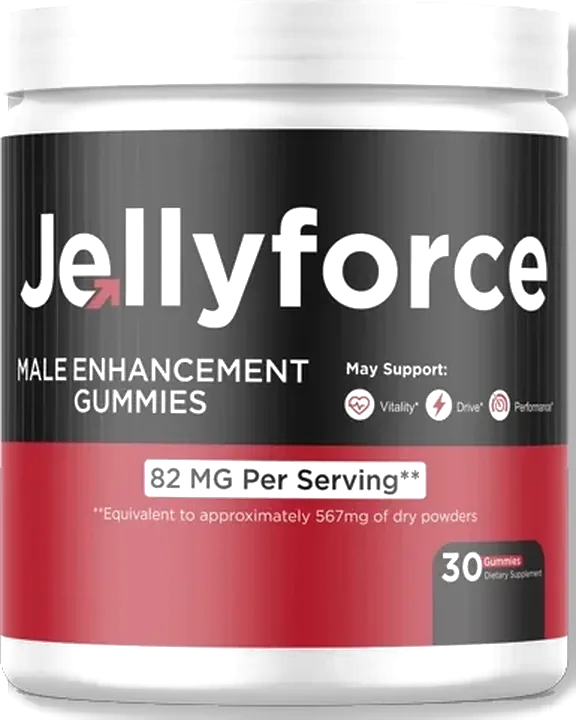
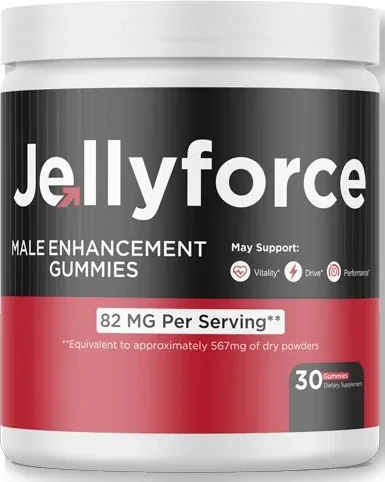
Nothing in the source material for Jelly Force suggests it is contaminated. It is not named in any notification this site has seen, and no test result of any kind says otherwise. Everything below is category guidance, written so a reader can run the checks on any brand in any store, this one included.
Check one: search the notifications list
It is free, public and takes under a minute. Search the FDA notifications page for the brand name, then for the product name, then for the company name printed on the label.
Search all three, because products get renamed. The distributor line is often the more stable one: on this label it reads Info Wealth CO, Pinellas Park FL, which is a distributor rather than a factory address. A hit tells you a great deal. A clean search tells you only that the FDA has not published a finding on that name, which is not a clean bill of health, because the agency cannot test everything sold online.
- Search the brand, the product name and the company on the label
- Check spelling variants, since packaging often differs from the listing
- Read the finding itself, not a summary of it, when a name appears
- Treat a clean search as the absence of a warning, not as proof of anything
Check two: know what a real certificate of analysis looks like
A certificate of analysis is a laboratory report about one batch. Without a lab, a lot and a set of results, it is a graphic rather than a document.
| Part of the document | What a real one shows | What a fake or useless one shows |
|---|---|---|
| The laboratory | A named independent lab with an address | A logo with no name |
| The sample identity | Product name and the exact lot number, matching your bottle | A product name with no lot |
| Dates | Date received and date reported, inside your bottle's shelf life | No date, or a date years old |
| The tests run | Named methods for identity, potency, heavy metals, microbes and undeclared drugs | The word tested |
| The results | A number per test with a specification beside it | The word pass alone |
| A signature | A named analyst or authorizing officer | Nobody |
Two more things. A certificate for a different lot than the one in your hand describes a different batch. And no certificate was supplied to this site for this product: the lot and certificate strings on the artwork are draft label text rather than laboratory results, which the batch verify page covers in full.
Check three: what a seal proves, and what it does not
A seal proves that somebody placed a graphic on a page. That is the entire claim it makes on its own. Proof is a document from an outside party with a name, a date and a result on it.
Read seals as a list of claims the seller is willing to make, then check each against the printed label. Some hold. On this product the vegetarian seal does better than most, because the gummy sets with apple pectin rather than gelatin and the panel prints it. Others do not: a natural ingredients seal sits above a line that starts with corn syrup and cane sugar, and natural has no fixed legal meaning on a supplement label.
- An FDA-registered facility mark is not FDA approval. Registration is an address on a list
- A GMP seal without a certifying body, a plant name and a date is a claim, not an audit
- A non-GMO or gluten-free badge with no certificate or test behind it settles nothing
- A doctor-developed mark with no named doctor cannot be checked by anybody
The FDA does not approve dietary supplements at all, which is why every label carries the line about statements not having been evaluated (FDA). The testing and quality page takes eleven seals one at a time.
Check four: a phone number that answers beats a badge
Badges cost nothing to add. A staffed phone line costs money every day, which is why it tells you more about a seller than any graphic on the page.
Before you order, find the contact route and use it once. Ask three questions: who manufactured this, is there a certificate of analysis for the lot I will receive, and what is the exact refund window. Then listen to the shape of the answer. A seller who says no certificate exists is being straight with you. A seller who replies with a picture of a seal has not answered. A seller you cannot reach at all has answered.
Call before you buy, not after
A pre-sale call is the cheapest test of a seller there is, and the answers are easier to get before money moves.
Ask who made it and where
A distributor address is not a factory address. Both can be true and only one tells you where the product was produced.
Ask for the refund window in writing
This site works to a 60-day window from purchase, and the binding version is the wording on the checkout page. Confirm it there.
Keep the order ID and the lot number
Together they are what a desk needs to help you. For orders, tracking and refunds here, that desk is +1 (302) 200-3480.
Check five: tell your doctor what you take
This is the one people skip, and it is the one that matters most. Write the supplement on the same list as your prescriptions and hand that list over at appointments.
There are two reasons. The first is interactions that are real and documented. NCCIH notes that ashwagandha interacts with sedatives and with thyroid, diabetes, blood pressure and immunosuppressant medicines, says long-term safety is unknown, and reports that although rare, a number of cases have linked liver injury to ashwagandha supplements (NCCIH). Ashwagandha is in this bottle, sixth of nine on the panel.
The second reason is bigger. Trouble with erections is common and often a symptom of something else. NIDDK lists heart and blood vessel disease, diabetes, chronic kidney disease, obesity, hormone problems, nerve damage, several common medicines, and stress or depression among the causes (NIDDK). Several of those get quietly worse while a person works through bottles.
Putting the five checks together
Run them in order and most of the risk in this aisle is behind you in ten minutes. None needs a laboratory or a subscription.
For this product: the panel prints nine ingredients inside one 82 mg blend, the sales page names five, no amount is published except caffeine at 5 mg, no laboratory document was supplied, and the seals are claims rather than certificates. Whether that is enough is your decision, and it is a better decision than one made from the front of the box. Start with reading a gummy label, then the men’s wellness guide.
Shopping this aisle: common questions
Where is the FDA list of tainted sexual enhancement products?
On the FDA website, under medication health fraud notifications for sexual enhancement and energy products. It is public and free, and it is linked in the sources below.
Is Jelly Force on that list?
Nothing in the source material for this product suggests it is contaminated or that it appears on any such list. The checks in this article are category guidance so you can search any brand yourself, including this one.
What is the single most useful check?
Searching the notifications list, because a hit is decisive and the search costs a minute. After that, asking for a certificate of analysis for your lot.
Does a GMP seal mean the factory was inspected?
It means good manufacturing practice is claimed. A real certificate names the auditing body, the plant and a date. A seal with none of those is a statement by the party selling the product.
Is an FDA-registered facility the same as FDA approved?
No. Registration means a plant is on a list the agency keeps. The FDA does not approve dietary supplements, which is why every supplement label carries the line about statements not having been evaluated.
Why does my doctor need to know about a herbal gummy?
Because herbal ingredients interact with medicines. Ashwagandha alone has documented interactions with sedatives and with thyroid, diabetes and blood pressure medicines.
What should I do if a product arrives with a broken seal?
Do not take it. The printed label says not to use the bottle if the seal under the cap is broken or missing. Call the order desk on +1 (302) 200-3480 with your order ID and lot number.
Sources for this page
- U.S. Food and Drug Administration. Sexual Enhancement and Energy Product Notifications. Source
- U.S. Food and Drug Administration. Avoiding Products Contaminated with Hidden Ingredients. Source
- U.S. Food and Drug Administration. Dietary Supplements. Source
- National Center for Complementary and Integrative Health. Ashwagandha: Usefulness and Safety. Source
- National Institute of Diabetes and Digestive and Kidney Diseases. Symptoms & Causes of Erectile Dysfunction. Source
Keep reading
Ready when you are
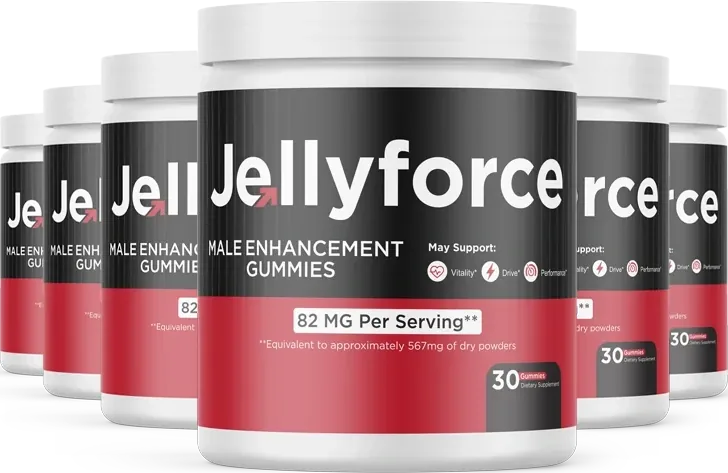
Order Jelly Force from the U.S. retail desk
One gummy a day. Follow the label on your bottle. 60-day money-back guarantee. A real person at +1 (302) 200-3480 for orders, tracking and refunds.