Read from the printed Supplement Facts panel
Jelly Force Ingredients List, in Label Order
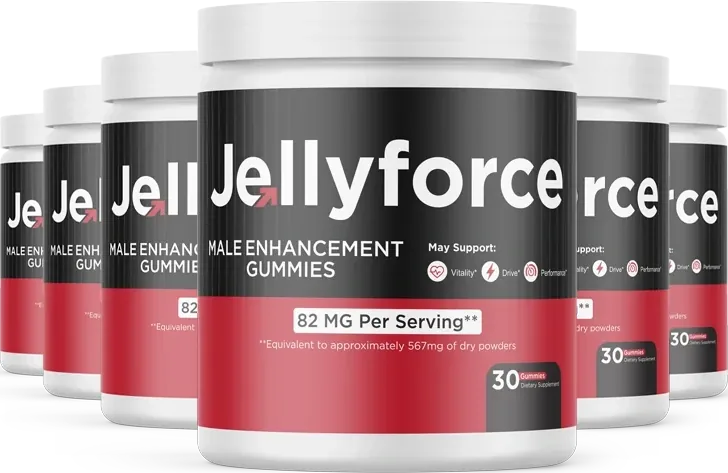
The Jelly Force panel prints nine ingredients inside one 82 mg proprietary blend.
The list starts with muira puama, maca and catuaba and ends with tribulus terrestris and horny goat weed extract. Caffeine, at 5 mg, is the only one with its own figure.
See how they fit together on the how it works page.
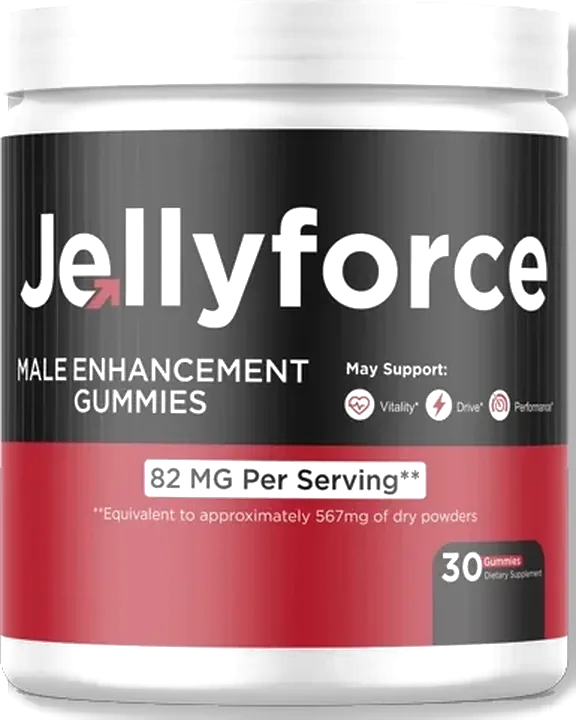
What ingredients are in Jelly Force?
Nine ingredients are printed on the Jelly Force Supplement Facts panel, and they all sit inside one line called Proprietary Blend, 82 mg. A blend line is allowed to give one total weight and then list its parts in order of how much there is, heaviest first (FDA labeling guide). So the panel gives you every name and one number.
The table is that list in printed order. The last column is the honest one: eight of the nine share whatever is left of 82 milligrams once the 5 mg of caffeine is taken out.
| Order | Ingredient | What the label calls it | On the sales page? | Amount printed |
|---|---|---|---|---|
| 1 | Muira Puama | Ptychopetalum olacoides, bark and root | Yes | Not printed |
| 2 | Maca Extract | Lepidium meyenii, root | Yes | Not printed |
| 3 | Catuaba Extract | a market name covering several Brazilian plants | Yes | Not printed |
| 4 | Green Tea Extract | Camellia sinensis | No | Not printed |
| 5 | Caffeine | 5 mg, printed on the panel | No | 5 mg |
| 6 | Ashwagandha | Withania somnifera, root | Yes | Not printed |
| 7 | L-Arginine | an amino acid | Yes | Not printed |
| 8 | Tribulus Terrestris | puncture vine | No | Not printed |
| 9 | Horny Goat Weed Extract | Epimedium | No | Not printed |
Every other printed line is typed out on the Supplement Facts page.
The five ingredients the sales page names
These five appear in both places, on the sales page and on the printed panel. The marketing list is not wrong so much as short. Each one below gets what is known and then what the label does not settle.
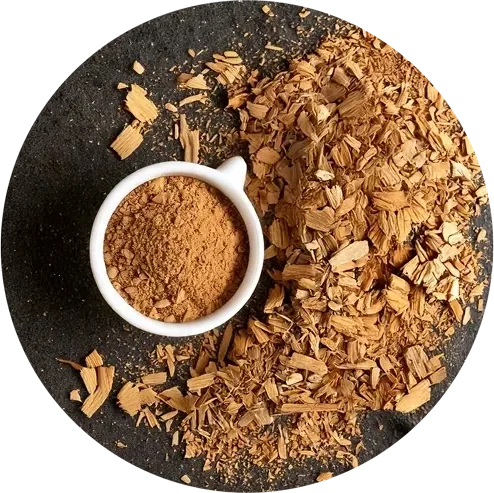
1. Muira puama (Ptychopetalum olacoides, bark and root)
An Amazonian bark with a long reputation in traditional use and a very thin controlled record in people. It is first in the printed order, so there is more of it than of anything else in the blend. A review of ingredients common in this category found the clinical evidence for most of them inadequate (Srivatsav et al., 2020). Not settled: the amount, the plant part, any extract ratio.
2. Maca extract (Lepidium meyenii, root)
A Peruvian root eaten as a food crop and sold worldwide as a powder. It is the better-tested botanical here. A systematic review of four randomized trials found limited evidence for sexual function and said the trials were too few and too small for firm conclusions (Shin et al., 2010). Not settled: how much maca is in one gummy.
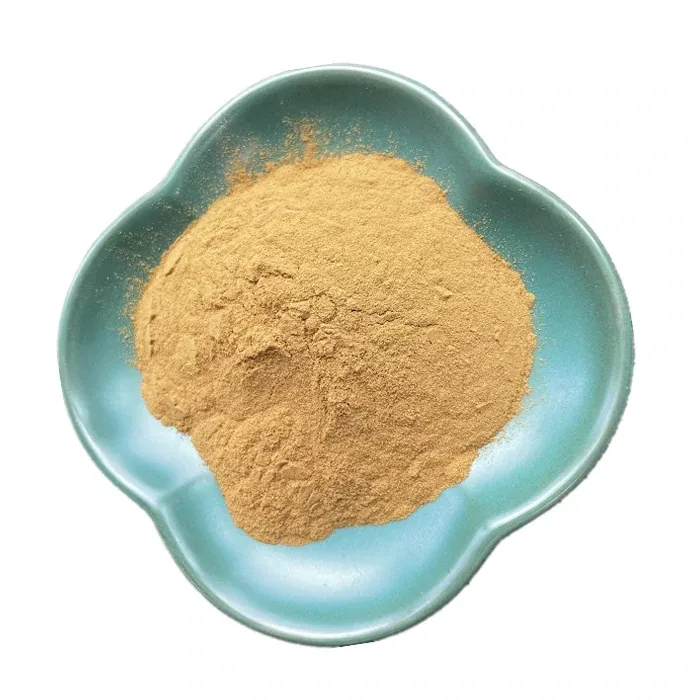
3. Catuaba extract (a market name covering several Brazilian plants)
Catuaba is a market name, not a species. Several unrelated Brazilian plants are sold under it, and the label prints the market name only. That gap matters more than the amount, because a study of one catuaba plant says nothing about another. The same review found no good clinical evidence for it (Srivatsav et al., 2020).
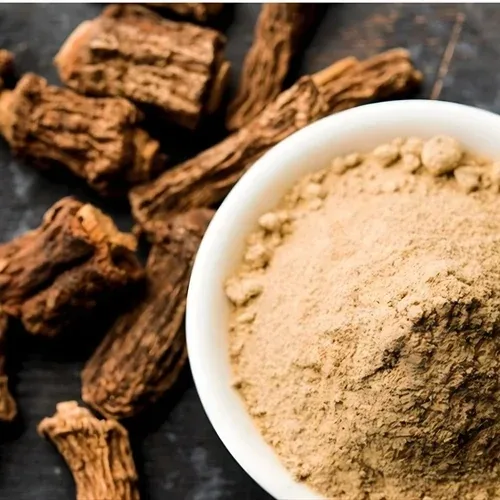
4. Ashwagandha (Withania somnifera, root)
The most studied plant in the bottle. NCCIH says some preparations may help sleep and stress, that long-term safety is unknown, and that although rare, a number of cases have linked liver injury to ashwagandha supplements (NCCIH). Not settled: the amount, or what it is standardized to.
5. L-arginine (an amino acid)
Scale is the whole story with this one. The review above called L-arginine the only ingredient in the category to show reproducible improvement across human trials, and NIH’s Office of Dietary Supplements notes doses of 2 to 20 grams a day in the performance research (NIH ODS). The entire blend weighs 82 mg, and arginine is seventh of nine in the order.
The four ingredients only the printed panel names
These four are on the bottle and not on the sales page: green tea extract, caffeine at 5 mg, tribulus terrestris and horny goat weed extract. None of them is alarming on its own. What they change is the list you thought you were buying.
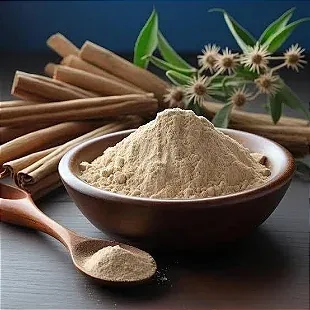
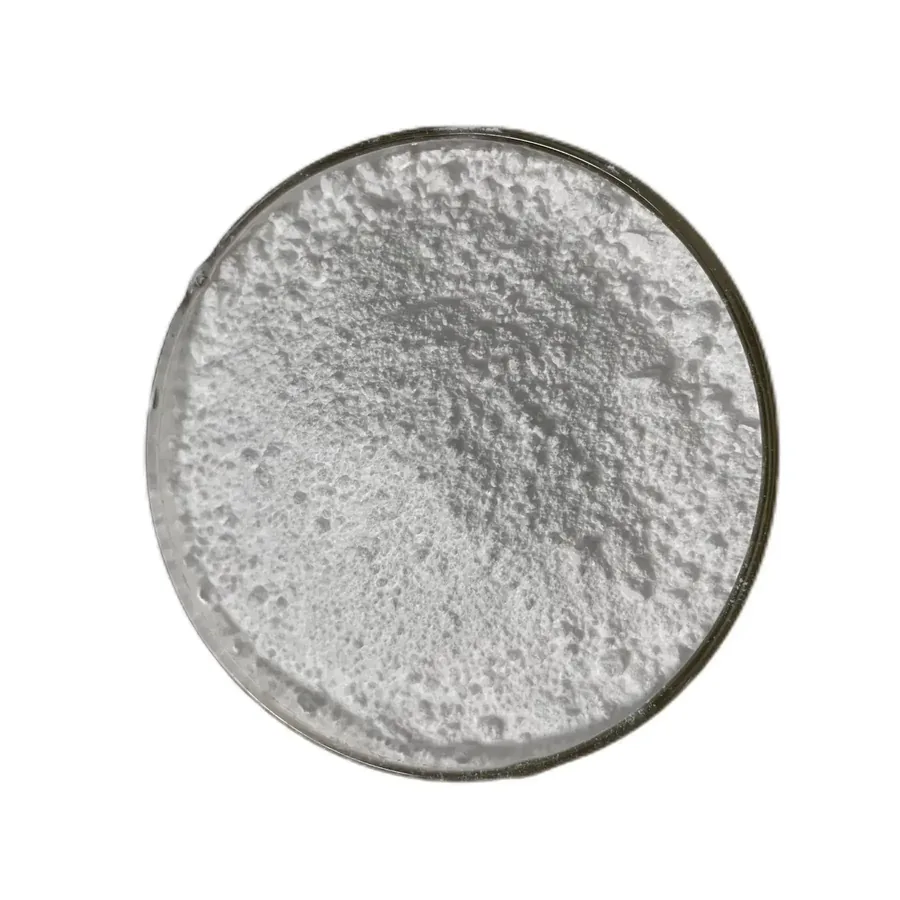
No photograph was supplied for any of these four, so there is nothing to show you here. The five above carry pictures only because pictures of them came with the source material.
6. Green tea extract (Camellia sinensis)
Fourth in the order, above ashwagandha and arginine. This is a common supplement source of caffeine and polyphenols. High-dose green tea extract has also been linked to rare cases of liver injury, which is why an unpublished amount is worth asking about rather than shrugging at (LiverTox, NIH).
7. Caffeine, 5 mg
The only ingredient inside the blend with its own number. The FDA points to 400 mg a day as the level not generally tied to problems in healthy adults, and a cup of brewed coffee is roughly 95 mg (FDA). So this is about a twentieth of a cup. It matters for one reason: a man avoiding caffeine deserves to read it on the list he was given.
8. Tribulus terrestris (puncture vine)
Sold for decades on a testosterone story. A controlled study in young men was titled, and concluded, that the aphrodisiac herb tribulus terrestris does not influence androgen production (Neychev and Mitev, 2005). It is eighth of nine here, and the sales page never mentions it.
9. Horny goat weed extract (Epimedium)
Last in the printed order, so it is the smallest share of the 82 mg. NIH’s LiverTox describes it as a traditional tonic and aphrodisiac whose active flavonoid is icariin, and rates it unlikely to cause clinically apparent liver injury (LiverTox, NIH). No icariin figure is printed.
What the printed order tells you, and what it cannot
The order is real information. Because blend parts run by descending weight, you can say there is more muira puama in a gummy than horny goat weed, and more green tea extract than ashwagandha. You cannot say how much more.
- All nine names, four more than the sales page gives
- The order, heaviest first, which is a labeling rule and not a design choice
- A ceiling: nothing after the caffeine can weigh more than 5 mg
- The label’s own fairer description, about 567 mg of dry powders
- How many milligrams of maca, ashwagandha or arginine you are taking
- Whether any single ingredient reaches an amount used in a published trial
- Which catuaba plant is in the bottle
- What any of the eight plant extracts is standardized to
The mechanism side is on how Jelly Force works, and the interaction side on the side effects page.
Other ingredients: what the gummy itself is made of
Under the blend the panel prints a second list for the gummy body: Corn Syrup, Cane Sugar, Water, Apple Pectin, Sorbitol Liquid, Natural Flavors, Citric Acid, Sodium Citrate Dihydrate. That is most of the weight of what you chew, and it is where the 3 grams of added sugar come from.
Apple pectin is the gelling agent, not gelatin, which is why the vegetarian seal holds up better than most of the seals around it. Sorbitol liquid is a sugar alcohol, and sugar alcohols give some people wind or loose stools. Natural flavors, on the same line, is an undefined term and settles nothing. If the phrase 100% natural is what caught your eye, this is the line to read: the claims page stamps that one against the panel.
Jelly Force ingredients: common questions
How many ingredients does Jelly Force have?
Nine, on the printed Supplement Facts panel, all inside one proprietary blend weighing 82 mg. The sales page names five of the nine: muira puama, maca, catuaba, ashwagandha and L-arginine.
Which four ingredients does the sales page leave out?
Green tea extract, caffeine at 5 mg, tribulus terrestris and horny goat weed extract. All four are printed on the panel inside the blend.
How much of each ingredient is in one gummy?
Not published, except the caffeine at 5 mg. The panel gives one weight for the whole blend, 82 mg, and adds that this is equivalent to approximately 567 mg of dry powders.
Does Jelly Force contain caffeine?
Yes. The panel prints caffeine at 5 mg, and the green tea extract above it is another caffeine source. Five milligrams is roughly a twentieth of a cup of coffee.
Is the ingredient order on the label meaningful?
Yes. Blend components are listed heaviest first, so muira puama outweighs maca and horny goat weed is the smallest of the nine. The order still gives you no milligram figure.
Which catuaba species is used?
The label does not say. Catuaba is a trade name covering several unrelated Brazilian plants, so the name alone cannot be matched to a particular study.
Sources for this page
- U.S. Food and Drug Administration. Dietary Supplement Labeling Guide: Chapter IV. Nutrition Labeling. Source
- Srivatsav A, Balasubramanian A, Pathak UI, et al. Efficacy and Safety of Common Ingredients in Aphrodisiacs Used for Erectile Dysfunction: A Review. Sexual Medicine Reviews, 2020. Source
- Shin BC, Lee MS, Yang EJ, Lim HS, Ernst E. Maca (L. meyenii) for improving sexual function: a systematic review. BMC Complementary and Alternative Medicine, 2010. Source
- National Center for Complementary and Integrative Health. Ashwagandha: Usefulness and Safety. Source
- NIH Office of Dietary Supplements. Dietary Supplements for Exercise and Athletic Performance: Fact Sheet for Health Professionals. Source
- LiverTox: Clinical and Research Information on Drug-Induced Liver Injury. Green Tea. National Institute of Diabetes and Digestive and Kidney Diseases. Source
- U.S. Food and Drug Administration. Spilling the Beans: How Much Caffeine is Too Much? Source
- Neychev VK, Mitev VI. The aphrodisiac herb Tribulus terrestris does not influence the androgen production in young men. Journal of Ethnopharmacology, 2005. Source
- LiverTox: Clinical and Research Information on Drug-Induced Liver Injury. Horny Goat Weed. National Institute of Diabetes and Digestive and Kidney Diseases. Source
Keep reading
Ready when you are
Order Jelly Force from the U.S. retail desk
One gummy a day. Follow the label on your bottle. 60-day money-back guarantee. A real person at +1 (302) 200-3480 for orders, tracking and refunds.